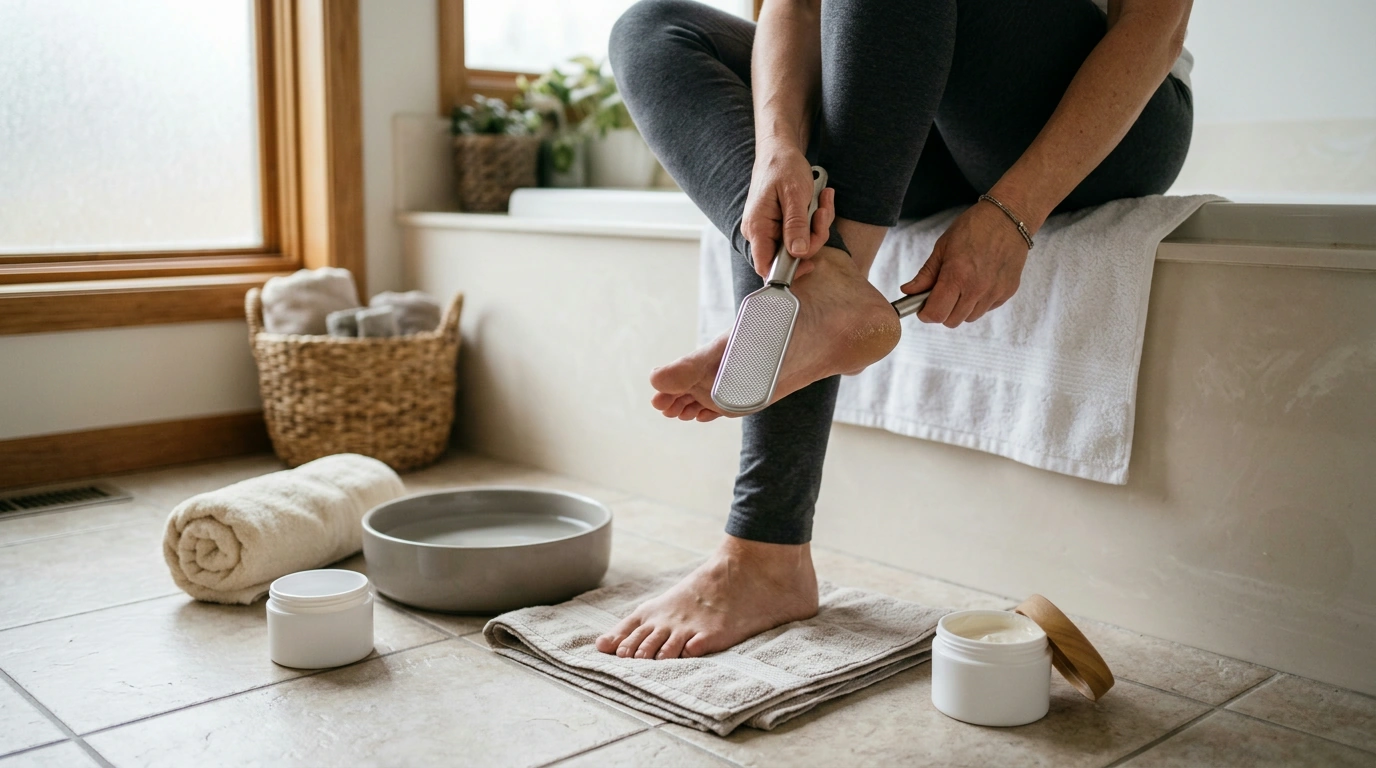
Rough heels and thick calluses can make feet feel uncomfortable and look uneven. A two-sided stainless steel foot file offers a simple, at-home way to refine dry skin with more control than disposable buffers, helping keep soles softer between pedicures. With two textures in one tool, it’s easier to “step down” from noticeable roughness to a smoother finish without overdoing it.
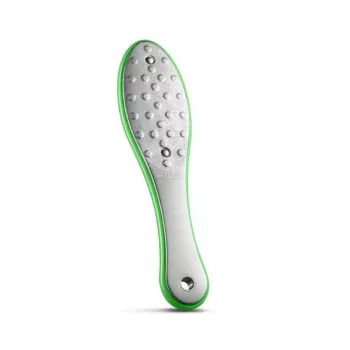
If you’re building a straightforward home routine, the Two-Sided Stainless Steel Foot File & Callus Remover for Pedicure is designed for repeat use and easy cleaning, so you can maintain results over time rather than starting over with single-use pads.
Calluses form where skin experiences steady pressure and friction—often the heels, balls of the feet, and outer edges. A stainless steel foot file helps reduce that built-up thickness gradually, which can make walking feel more comfortable and help moisturizers absorb better.
For general foot-health guidance and prevention habits, the American Podiatric Medical Association (APMA) is a helpful reference.
The biggest advantage of a dual-sided file is control. The coarser side tackles the thickest patches, while the finer side smooths and blends so the skin feels even rather than “spot-treated.” Keep pressure light; you’re refining the surface, not grinding down skin.
| Side | Best for | How it should feel | When to stop |
|---|---|---|---|
| Coarser surface | Thicker calluses and rough heel patches | Noticeable smoothing without pain | When the area feels flatter and less “grabby” |
| Finer surface | Finishing and overall polishing | Gentle refinement | When skin feels even and looks uniformly smooth |
A reliable routine is less about removing “everything” in one session and more about keeping roughness from building up. Think of it as maintenance: soften first, file conservatively, then seal in moisture.
If you like to turn your shower into a simple head-to-toe reset, pairing foot care with a gentle body-exfoliation tool can help keep overall skin texture consistent. The Long Handle Shower Back Brush is an easy add-on for hard-to-reach areas, especially if dry skin shows up beyond your feet.
Callus removal should never be painful. Removing too much too quickly can leave skin tender and more prone to irritation. Aim for gradual smoothing that keeps the skin comfortable and intact.
For risk considerations related to sensation changes and foot care, Mayo Clinic’s overview of diabetic neuropathy is a useful starting point.
Stainless steel tools can last longer when cleaned promptly and stored dry. Keeping the surface free of residue also helps maintain consistent filing performance.
A two-sided stainless steel file fits well into practical routines—especially when your feet regularly deal with friction from daily movement or footwear.
For a simple, reusable tool that supports steady maintenance, consider the Two-Sided Stainless Steel Foot File & Callus Remover for Pedicure as the foundation of your routine.
For maintenance, start with 1–2 times per week and adjust based on how quickly roughness returns. Use light pressure, stop at any tenderness or redness, and moisturize right after to keep skin comfortable.
A brief soak softens callused skin, but drying your feet before filing usually gives better control and more even results. Some prefer dry filing for precision; if you do, keep sessions short to avoid over-filing.
Minor dryness and superficial roughness can be smoothed gently, but deep cracks, bleeding, or painful fissures shouldn’t be filed aggressively. Focus on moisturizing and protective care, and consult a clinician if cracking is severe or shows signs of infection; Cleveland Clinic’s overview of cracked heels explains common causes and treatment options.








Leave a comment