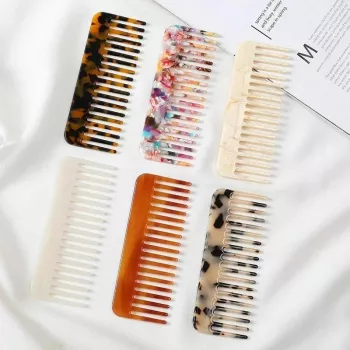
Colorful Wide Tooth Hair Comb: Anti-Static Marbling Detangler for Every Hair Type
A wide-tooth comb can make detangling faster, gentler, and far less frustrating—especially on wet hair or textured styles. This colorful marbling comb is designed to glide through knots with less pulling, help reduce static, and work across straight, wavy, curly, and coily hair for everyday styling at home or on the go. For more guidance, see Birth Certificate – Iowa Research Online.
What Makes a Wide-Tooth Comb Different
Wide-tooth combs are built for separation rather than “raking” through hair. That small design change can make a noticeable difference in comfort and breakage risk, especially when hair is damp and more vulnerable. For further reading, see Primary & Secondary Sources.
- Wider spacing helps separate strands without snagging, making it useful for detangling and distributing product.
- Often preferred for wet detangling because it can reduce mechanical stress compared with finer teeth.
- Supports curl clumping and definition by minimizing disruption to natural curl patterns.
- Useful for lifting at the roots and fluffing volume without over-brushing.
For general hair health habits—like minimizing rough handling and avoiding unnecessary damage—see the American Academy of Dermatology Association’s guidance on hair care tips for healthy hair.
How Anti-Static Detangling Helps Day to Day
Static doesn’t just look like flyaways; it can also make tangles worse by causing strands to cling to each other. A wide-tooth comb with a smoother, low-drag feel can help you detangle with fewer “catch points,” especially when paired with a bit of moisture.
- Static typically shows up as flyaways, frizz, and hair that “floats” or clings to clothing—common in dry air and during winter.
- An anti-static approach focuses on smoother pass-through detangling and reducing friction, which can help keep hair more controlled.
- Gentler detangling can mean fewer broken hairs around the crown and nape where tangles often form.
- Pairing a wide-tooth comb with a leave-in conditioner or detangling spray can further reduce friction during comb-through.
If hair snaps easily or seems rough at the ends, it may help to review common causes of breakage and prevention habits from the Cleveland Clinic.
Best Uses by Hair Type and Situation
The biggest advantage of a wide-tooth comb is versatility. It’s not just a “curly hair tool”—it can be a smart everyday option for nearly anyone who wants fewer snags and faster detangling.
- Straight hair: Quick detangling after washing, distributing conditioner through mid-lengths and ends.
- Wavy hair: Helps detangle without breaking up waves too much—use with product for more definition.
- Curly and coily hair: Ideal for section-by-section detangling with slip (conditioner/cream) to protect curl structure.
- Thick hair: Wide teeth handle larger sections and help reduce tugging.
- Fine hair: Use gentle pressure and start from ends upward to prevent stretching and breakage.
- Protective styles and extensions: Useful for careful detangling at the ends; avoid catching at attachment points.
How to Detangle Gently (Wet or Dry)
Even the best tool works best with a soft, methodical technique. Slow down, add slip, and let the comb do the work instead of forcing it through resistance.
- Start at the ends: Hold hair above the tangle to reduce tension on the scalp, then work upward in small steps.
- Use slip: Apply conditioner in the shower or a leave-in/detangler after; comb through while hair is damp, not dripping.
- Section thick or textured hair: 4–8 sections makes detangling faster and helps ensure even product distribution.
- Be extra careful on wet hair: Hair is more elastic when wet, so use light pressure and fewer passes.
- For curls: Comb only when damp with product, then scrunch and let curls set to maintain definition.
Quick Detangling Guide
| Hair condition |
What to apply |
Technique |
Goal |
| Wet (post-shampoo) |
Conditioner |
Comb from ends upward in sections |
Remove knots with minimal pulling |
| Damp (after shower) |
Leave-in conditioner |
Slow, single passes; avoid repetitive combing |
Smooth and prep for styling |
| Dry (light tangles) |
Light detangler or serum |
Spot-detangle ends first; gentle lift at roots |
Tidy without creating frizz |
| Curly/coily (styling) |
Curl cream + water |
Section, comb once, then scrunch |
Keep curl clumps intact |
Marbling Look, Everyday Practicality
When a tool is easy to find, it’s easier to use consistently. The colorful marbling style stands out in a bathroom drawer, on a shower shelf, or in a travel pouch—so quick touch-ups don’t turn into a frantic search.
- Colorful marbling adds an easy-to-spot tool for bathrooms, gym bags, or travel kits.
- Wide-tooth shape supports multi-use styling: detangling, parting larger sections, and refreshing curls.
- A lightweight comb can be convenient for quick touch-ups without heat tools.
- For best longevity, rinse off product buildup regularly and let it dry fully before storing.
Care, Cleaning, and Storage
When to Replace a Comb
Shop In-Stock Self-Care Essentials
FAQ
Is a wide-tooth comb better than a brush for detangling?
Often, yes—wide teeth can reduce snagging and are commonly preferred for wet hair or curl patterns. That said, gentle technique (starting at the ends and using light pressure) matters more than the tool alone.
Can this type of comb be used on wet hair?
Yes, it can be used on damp or wet hair, especially with conditioner or a leave-in to add slip. Start at the ends, work upward in sections, and keep pressure light because wet hair is more fragile.
How do you reduce static and flyaways while combing?
Use a hydrating leave-in or a small amount of serum, and avoid over-combing once the hair is detangled. Static is usually worse in dry air, so keeping hair slightly moisturized and reducing friction helps.
Recommended for you








Leave a comment