
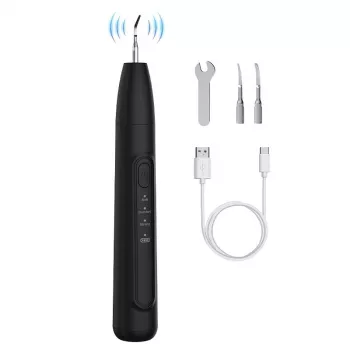
Tartar buildup and surface stains can make teeth look dull and gums feel irritated, especially in hard-to-reach areas. An ultrasonic dental scaler uses high-frequency vibration to help loosen deposits so daily brushing and flossing work better. Used carefully and consistently, it can support a fresher-feeling mouth between dental visits.
Home ultrasonic scalers are designed to help disrupt and lift soft plaque and small tartar deposits from the visible tooth surface. Instead of relying on heavy scraping pressure, the vibrating tip helps break up buildup with a lighter touch.
For oral health guidance and the role of professional cleanings, see the American Dental Association (ADA) oral health topics.
Some mouths form calculus faster than others, and some areas collect plaque more easily even with good brushing habits. A careful, conservative scaling routine can be most helpful for:
The goal is “detail work,” not aggressive scraping. If you’re tempted to force off a stubborn deposit, that’s a sign to pause and consider a professional cleaning instead.
| Do | Avoid |
|---|---|
| Use light contact and steady motion | Pressing hard to “chip off” deposits |
| Start on low intensity and reassess | Jumping to high intensity immediately |
| Work in small sections and take breaks | Long continuous sessions that fatigue the hand |
| Keep to visible tooth surfaces | Forcing the tip under the gumline |
| Stop if there is pain or bleeding that persists | Continuing through sharp pain or significant bleeding |
Both manual and ultrasonic tools can remove buildup from visible surfaces, but they behave differently in the hand.
Gum inflammation can be a sign of gingivitis or periodontitis. For symptom overviews and when to seek care, reference the CDC page on gum disease and the Mayo Clinic guide to gingivitis and periodontitis.
Comfort and control matter as much as power. A good at-home scaler should make it easier to use a delicate touch.
If you’re building a more detailed between-checkups routine, the Ultrasonic Dental Scaler is a practical option for careful touch-ups around common buildup zones (like the gumline and the backs of lower front teeth). Best results come from short, controlled sessions paired with daily brushing and flossing.
Many people can use a home scaler safely with a light touch and conservative technique. Keep to visible tooth surfaces, avoid going under the gumline, and stop if there’s sharp pain or significant bleeding. Regular professional cleanings still matter for thorough tartar removal.
Short sessions 1–2 times per week (or only when you notice visible buildup) are usually more appropriate than daily heavy scaling. If tartar returns quickly or you’re constantly finding rough deposits, it’s a good sign you need a professional cleaning and a hygiene check.
It can if you press too hard, linger in one spot, or try to force the tip under the gumline. Using the lowest effective setting, maintaining constant motion, and focusing only on visible surfaces helps reduce risk—especially if you have sensitive gums.









Leave a comment